

On January 16, 2026, six government departments of China, including the Ministry of Industry and Information Technology (MIIT), the National Development and Reform Commission (NDRC), the Ministry of Ecology and Environment (MEE), the Ministry of Transport (MOT), the Ministry of Commerce (MOFCOM), and the State Administration for Market Regulation (SAMR), jointly issued the Administrative Measures for the Recycling and Comprehensive Utilization of Waste Traction Batteries from New-Energy Vehicles (hereinafter referred to as " the Measures"). The Measures will officially take effect on April 1, 2026.
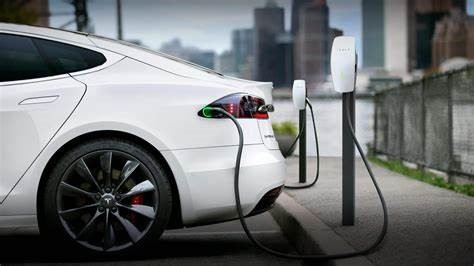 | Background In 2025, both the production and sales of new-energy vehicles in China exceeded 16 million units, accounting for over 50% of total annual new vehicle sales. As vehicles launched in the early market gradually enter the battery degradation phase, the number of retired traction batteries is rising rapidly. The basic consideration of drafting the Measures is, if a large number of retired batteries are not handled properly, it will not only cause resource waste but also pose environmental pollution and safety risks. Prior to the promulgation of these Measures, the requirements for new-energy vehicle traction battery management were scattered in four different regulations: the Interim Administrative Measures for the Recycling and Utilization of Traction Batteries from New-Energy Vehicles (issued in 2018), the Interim Provisions on Traceability Management for the Recycling and Utilization of Traction Batteries from New-Energy Vehicles (issued in 2018), the Guidelines for the Construction and Operation of Traction Battery Recycling Service Outlets for New-Energy Vehicles (issued in 2019), and the Administrative Measures for the Cascade Utilization of Traction Batteries from New-Energy Vehicles (issued in 2021). The formulation of the Measures aims to consolidate regulatory provisions and improve system design to better close recycling loopholes, strengthen accountability, and promote high-quality industry development. Upon the official implementation of this regulation, the aforementioned four regulations will be simultaneously repealed. |
Structure and Scope of Implementation
The Measures consists of 8 chapters: i) general provisions; ii) production and coding of traction batteries of new energy vehicles; iii) recycling of waste traction batteries; iv) comprehensive reuse of such traction batteries; v) information management; vi) supervision management; vii) legal responsibilities; viii) supplementary provisions.
All activities related to the recycling, comprehensive utilization, and related operations of waste traction batteries conducted within the territory of China shall comply with these Measures.
It is important to note that these regulations do not apply to the management of the recycling, comprehensive utilization, and related activities of batteries classified as hazardous waste, such as waste lead-acid traction batteries. The Measures are not also applicable to vehicles of battery swap models.
Establish Nationwide and Digital Battery Identity Management
To enhance regulatory efficiency, the Measures require to establish a "new-energy vehicle traction battery digital ID" system on the national level. Each traction battery will be assigned a unique code and registered on a unified national traceability information platform. Real-time uploading and dynamic tracking of information throughout the entire process, covering from production, installation in vehicles, and usage to recycling, echelon utilization, or resource recovery, will be implemented. Such requirements not only assist regulatory authorities in monitoring battery flows and preventing "black market circulation" but also provide data support for subsequent activities such as echelon utilization assessment, residual value calculation, and carbon footprint accounting, thereby promoting the industry's green and intelligent upgrade.
Integrated Vehicle-Battery Scrapping
The Measures explicitly stipulate, for the first time, that "end-of-life new-energy vehicles must be scrapped with their traction batteries intact", meaning the traction battery must not be missing when a vehicle is scrapped. If a traction battery is found missing, the vehicle will be deemed incomplete and will not be processed through formal scrapping procedures. This regulation effectively curbs the unauthorized removal and illegal resale of batteries by some vehicle owners or dismantling enterprises, ensuring from the source that waste batteries enter formal recycling channels.
Simultaneously, the Measures cover the entire chain, including battery production, vehicle manufacturing, battery-swapping operations, maintenance and replacement, and scrapping and dismantling, requiring all participating entities to fulfill their respective recycling responsibilities. Automobile manufacturers bear the primary responsibility for recycling the batteries installed in their vehicles. Battery manufacturers are responsible for batteries sold directly to the market. Cascade utilization enterprises are required to implement closed-loop recycling for their products.
Strengthened Legal Liability
For addressing issues such as unclear responsibilities and weak enforcement in previous recycling systems, the Measures establish clear legal liabilities for different entities.
Entities such as traction battery enterprises, new-energy vehicle manufacturers, battery-swapping service enterprises, motor vehicle maintenance enterprises, end-of-life motor vehicle recycling and dismantling enterprises, and comprehensive utilization enterprises each bear their own primary responsibilities within their respective segments.
For actions such as failing to deliver waste batteries as required, not fulfilling recycling obligations, or violating coding and information submission requirements, relevant entities will face administrative penalties including orders for rectification, warnings, and fines, as stipulated by law. The Measures also specify the relevant competent authorities responsible for implementation, enhancing the enforceability and deterrent effect of the regulations.
Clarified Interim Timeline
According to the requirements of the Measures, enterprises that obtained new-energy vehicle product access or compulsory product certification for new-energy vehicles before these Measures take effect, and whose relevant new-energy vehicle products are still in production or sale, must, within six months after these Measures take effect, supplement and submit technical information regarding the disassembly and necessary dismantling of new-energy vehicle traction batteries in accordance with the procedures stipulated in these Measures.
Summary and suggestions
Compared with the currently effective 4 regulations for the same purpose, the 2026 Measures represents a systematic upgrade based on previous regulations, integrating the new phase of industrial development, emerging trends in technological progress, and new demands from regulatory practices. It takes a crucial step forward, particularly in areas such as digital supervision, refined accountability, and penalty mechanisms.
Besides, foreign stakeholders are advised to notice that two national voluntary standards are cited in the articles:
- GB/T 34014 Coding regulation for automotive traction battery: referenced as the specific requirements on labelling requirements for coding the traction batteries that are produced or imported for the sale or use in China territory.
- GB/T 38698.2 Recovery of traction battery used in electric vehicle - Management specification - Part 2:Take-back service network: cited by the Measures as the criteria for establishing service networks, which is an action that encouraged relevant EV manufacturers to take.
Top Read Articles
Switch articles-
 2026.05.13
Emission Mandatory Standards for Automotive Production Seeking Public Comments – APR, 2026
-
 2026.05.11
Three ICT Energy Efficiency National Standards Calling for Relevant Data – APR, 2026
-
 2026.05.08
New Regulation Intends to Optimize Voluntary Certification Schemes – APR, 2026
-
 2026.05.06
Official Catalogue of Energy Label Updated in China – APR, 2026
-
 2026.04.29
Critical Working Meeting Sets Principle for Association Standard Management – APR, 2026