

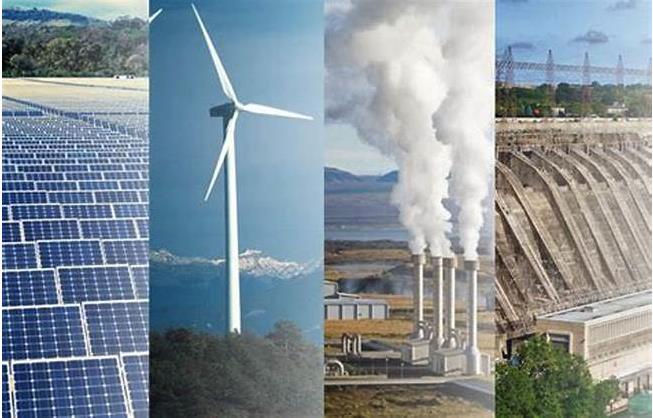
 At the end of July, 2026, the National Development and Reform Commission (NDRC) of China and the National Energy Administration (NEA) jointly issued the 15th Five-Year Plan for the Development of a New Power System (hereinafter referred to as “the Five-year Plan”), outlining the overall approach for China's power development over the next five years, and outline the main goals, major projects, and key tasks for the power industry.
The Plan sets up quite specific goals for 2023, which mainly include:
- Establish a green and low-carbon power supply structure with non-fossil fuel electricity generation accounting for 50%.
- Initially build a new type of power grid that is secure, reliable, green, low-carbon, robust, resilient, intelligent, and flexible, along with a charging infrastructure network capable of supporting over 110 million electric vehicles.
- Key technologies and equipment supporting the new power system have achieved breakthrough progress, an intelligent, green, and integrated power industry system has been formed, and a unified national electricity market system has been basically established.
The contents of the Five-year Plan outlines measures and targets for building a new power system covering generation, grids, users, storage, supply security, markets, and safety. On the generation side, it will push renewables, hydro, and nuclear, while retrofitting coal plants for cleaner operations. For grids, the plan aims to build smart distribution networks and strengthen disaster resilience. On the user side, it encourages virtual power plants, demand response, and vehicle-to-grid (V2G) integration. To boost flexibility, it calls for speeding up pumped storage and new battery storage, and shifts coal power more toward regulation. It also reinforces supply security and inter-regional support, improves charging infrastructure and power quality, advances the unified national power market, tightens safety governance, and promotes coordination with computing and transportation. Finally, it lays out implementation safeguards.
Specifically, the Five-year Plan elaborates actions for two emerging sectors that requires better grid network: computing power and new energy vehicle charging systems. It states to achieve coordinated development between power and computing capabilities by proposing to integrate energy resource allocation with computing infrastructure construction, jointly plan and layout computing and power projects to strengthen computing through electricity and advance power through computing, as well as increase the share of green electricity in computing facilities. The plan also outlines a series of measures to foster integrated development between power and related sectors, such as promoting synergistic coordination among electricity, heat, and hydrogen and advancing the integration of power and transportation.
The efforts to improve present standardization work and standard systems are also put forward in the document. In general, it calls for accelerated standardization efforts for the new power system, and encourage stakeholders to actively participate in international standardization in the power sector, strengthen intellectual property protection, and enhance the development of international standards. Strengthen the construction of testing and inspection capabilities. Further measures are planned as:
Enhance local curing design and disaster prevention standards.
Establish and improve general standards and dispatch specifications.
Strengthen collaborative interaction capabilities on the power consumption side.
Develop technical standard systems for virtual power plants, smart microgrids, grid-connection technologies, vehicle-to-grid interactions, and related standard frameworks; implement new thermal power construction standards.
Develop and revise power safety standards.
Formulate and update national and sector standards for grid-connected entities regarding grid-related safety management.
Reinforce risk control across generation, transmission, load, and storage sectors.
Especially for EV charging infrastructure, the key actions and goals that the Five-year Plan portrays is quire comprehensive, and the details include:
Accelerate the development of a charging network covering cities, highways, and rural areas (with area-based, linear, and point-based layouts respectively);
Upgrade charging facilities at expressway service areas to establish an intercity network capable of supporting medium- and long-distance travel;
Achieve full coverage of public charging infrastructure in rural areas, except for islands and high-altitude or extremely cold regions.
Increase the proportion of fast-charging stations, steadily advance high-power charging, and install high-power charging facilities along major freight corridors for heavy-duty trucks.
Improve electricity application and connection services in residential areas, pilot a model offering integrated construction, operation, and maintenance services, optimize station environments and signage, strengthen operations and maintenance, and comprehensively enhance users' charging experience.
If any further information is needed, or any question you may have, please contact us at: assistant@bestao-consulting.com.
Top Read Articles
Switch articles-
 2026.08.28
China Proposes Seven Mandatory Standards for Data and Cybersecurity Case Handling – AUG, 2026
-
 2026.08.28
China Eases Personal Information Protection Duties for Small-Scale Handlers – JUL, 2026
-
 2026.08.24
National ICV Standard Revised into Mandatory Requirements in China – AUG, 2026
-
 2026.08.21
Regulation of China on Integrated Circuits Design Protection Revised – AUG, 2026
-
 2026.08.21
CCC Implementation Rules Revised for Two Product Categories – AUG, 2026